When upgrading to a heat pump, homeowners often focus on efficiency ratings and equipment size. There’s another key factor that plays a major role in comfort and year-round performance in Massachusetts: a heat pump system’s turn-down ratio.

In fact, turn-down ratios are one of the most important things to consider when selecting heat pump equipment.
In this article, learn what a turn-down ratio is, why it matters, and what turn-down ratio you should look for when choosing a heat pump system.
When discussing heat pumps, a turn-down ratio describes the amount a heat pump system can modulate (or adjust) for its heating/cooling output. It’s the ratio of the heat pump’s minimum output to maximum capacity.
To better understand the importance, we need to dive a bit deeper into how a heat pump system should be sized:
A well-designed heat pump system is sized using an ACCA-Approved Manual J Calculation to address 99% of all weather conditions. By doing this, the heat pump system is sized to meet the needs of a cold or warm day that falls into the 99th percentile of events based on factors such as the home layout, location and construction.

In Jay Moody HVAC’s service area, that design temperature tends to fall around an 8°F, 14 mph wind day for the winter and an 88°F , 75 dewpoints in the summer.
Since the heat pump system is designed to meet the needs of a very cold day in the winter and a very hot day in the summer to account for Massachusetts temperature swings, it’s important the system can turn itself down to meet the lower capacity heating/cooling demand when the weather is not at one of the extremes. This is where a system’s turn-down ratio comes into play.
Most old furnaces, air conditioners and boilers are oversized, even for these “extreme” design days. To regulate, they turn themselves on and off.
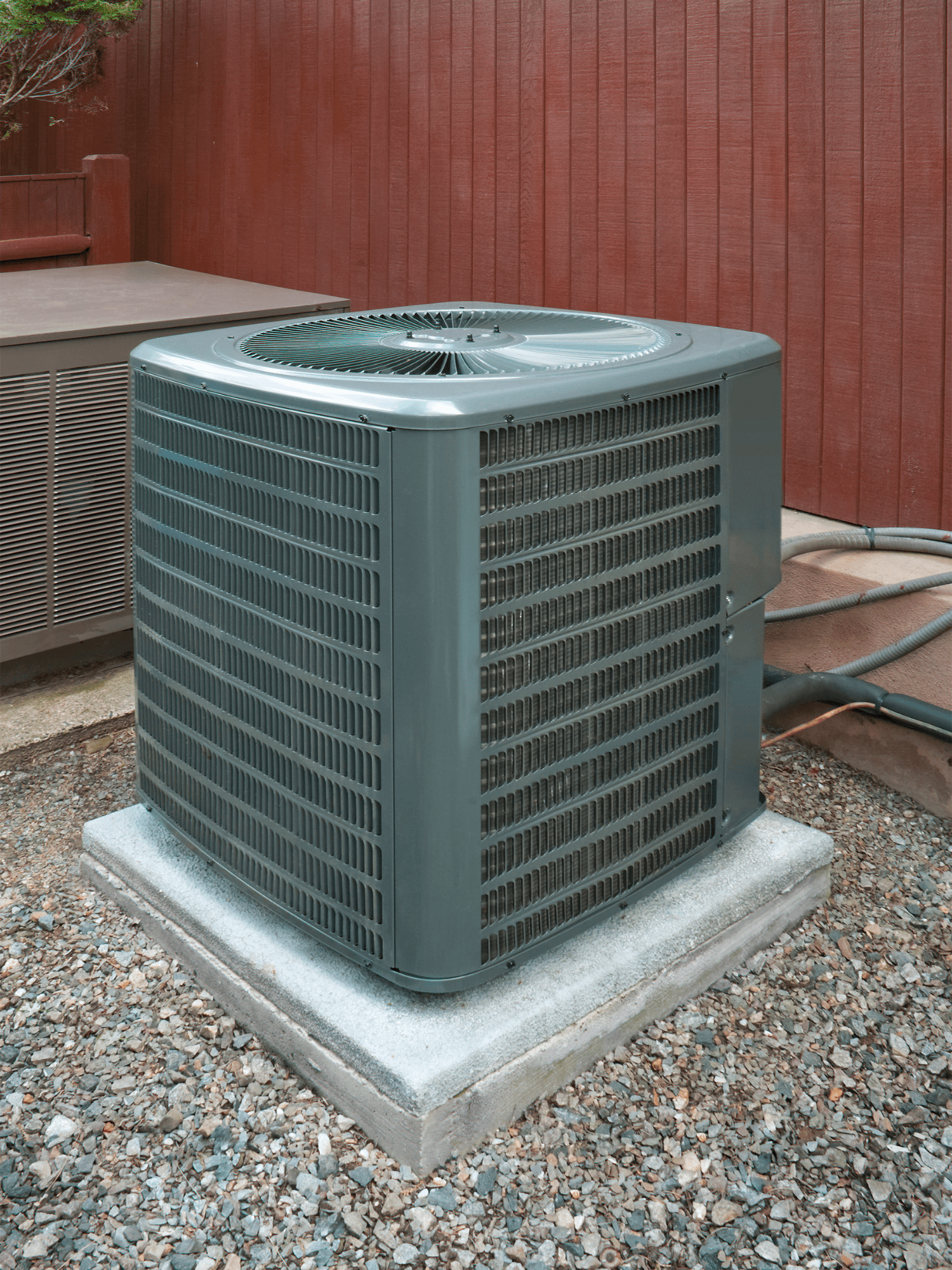
Take an oversized air conditioner: Because the AC system is too large, it will reach the set temperature extremely fast, especially on more moderate summer days.
Once the AC reaches the temperature setpoint, it will turn off to regulate and then turn back on when the indoor temperature begins to rise above the thermostat setpoint again.
A heat pump is not designed to frequently turn off and on. Doing so is called short-cycling, and this process not only results in reduced system efficiency but also puts added strain on the system which can impact its overall performance and system lifespan.
Short-cycling is hard on the equipment, much like stop and go deivinf vs. highway driving. Some manufacturers even void warranties if the equiptment cycles too often.
Instead, a heat pump is designed to run continuously and through its control mechanisms, adjust its output to what is going on in the home. In heating mode, a heat pump will match the heat leaving the home to keep it at a constant internal temperature (communicated by your thermostat). As the day warms up, or the sun changes, or if you turn the oven on, the heat pump will turn down (or up) to keep the house at a constant temperature. The same process occurs when the heat pump is in cooling mode.
For a heat pump system to operate efficiently and effectively two things need to be true:
1. The heat pump system must be sized correctly using a Manual J Calculation (and a Manual D Calculation when ductwork is involved).
The turn-down ratio matters more if the system is oversized and less if undersized. When a system is incorrectly sized, the capacity is mismatched to the needs of the home, and the equipment will struggle to turn down enough on mild days or up enough on extreme days. In the case of over-sized, the equipment will likely short cycle on mild days and in the case of under-sized, it will have to run at max capacity and use a lot more energy than a properly sized system
2. The heat pump equipment selected must have an effective turn-down ratio to allow it to gradually adjust to the temperature needs of the space it is conditioning.
A correctly sized system that does not account for turn-down ratio can use more energy when meeting reduced temperature demands (increasing heating/cooling bills), struggle to maintain consistent indoor temperatures during more moderate weather and can cause strain on the equipment.
To reiterate, turn-down ratio is what describes a system’s ability to turn up or down its output to meet the temperature demand of the home. It can also be compared to idling—how low can a unit idle?
The current absolute best-in-class heat pump turn-down rate is 10%, meaning the system can turn down 10% of the rated output. Following this, many brands successfully achieve 25% turn-down, while others struggle to reach 60% on some equipment. Jay Moody HVAC does not install the latter.

The equipment installed by Jay Moody is sized using the Manual J standard, and most have a 25% turn-down ratio.
As discussed, turn-down ratio is a crucial but often overlooked factor in designing an effective heat pump system. This is especially true in Massachusetts where temperatures vary throughout the year.
At Jay Moody HVAC, our degreed engineers prioritize using equipment with strong turn-down capability. Using science-backed design methods, including accurate in-home Manual J & D Calculations, we provide heat pump systems tailored to the unique needs of each Massachusetts home. The result? Optimal system efficiency, reliable performance, and year-round comfort.
Schedule your free in-home consultation today and find the best comfort solution for your home!
Whether you’re looking for reliable HVAC, electrical or plumbing services,
we’re here to help!
"*" indicates required fields
