Tankless and heat pump water heaters can both reduce energy use, but they work in very different ways. One heats water as it is needed, while the other stores hot water and uses heat from the surrounding air to warm it. For Central Massachusetts homeowners, understanding that difference is a helpful first step toward choosing the ideal system.
What Is a Tankless Water Heater vs. Heat Pump Water Heater? What’s the Difference?
The biggest difference in a tankless water heater vs. heat pump water heater is how each system heats water:
- Tankless water heater: Heats water as you use it, so there is no tank keeping a stored supply hot throughout the day.
- Heat pump water heater: Stores hot water in a tank but uses warmth from the surrounding air to heat it rather than relying primarily on electric resistance.
However, efficiency ratings are just one factor. Your household’s hot water use, the system’s location, and the home’s gas, electrical, venting, and drainage setup all need to be considered.
How a Tankless Water Heater Delivers Endless Hot Water
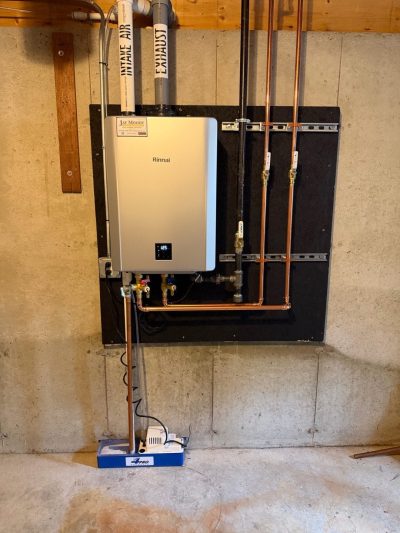
A tankless water heater turns on when you open a hot-water tap. Water flows through the unit, heats to the set temperature, and stops heating when the tap closes.
A properly sized system can provide a steady supply of hot water, but it still has limits. Running several showers and appliances at once may exceed the unit’s flow rate, especially when incoming water is colder.
Installation can also require updates such as a larger gas line, approved venting, condensate drainage, or added electrical capacity. As a result, proper sizing and professional installation is a must.
The Efficiency of a Heat Pump Water Heater: Moving Heat to Save Energy
A heat pump water heater works much like a refrigerator in reverse. Instead of creating most of its heat directly, it pulls heat from the surrounding air and transfers it into the water. According to the U.S. Department of Energy, these systems can be two to three times as energy efficient as conventional electric water heaters.
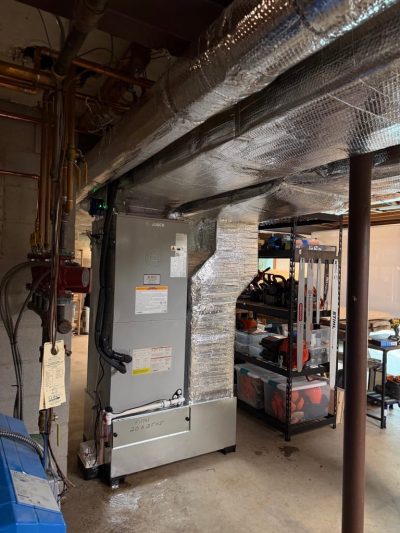
Keep in mind that this type of water heater has specific space requirements. The unit needs access to enough ambient air, so a tight closet may require louvers or ducting. It also releases cool, dehumidified air and produces condensate, making a suitable drain necessary. Basements and utility rooms are often good candidates, but room size, temperature, ceiling clearance, and manufacturer specifications still need to be evaluated.
A hybrid model can activate electric resistance elements when hot-water demand is high. This improves recovery but uses more electricity than heat-pump-only operation.
Choosing the Right Water Heater for Your Massachusetts Home
Ultimately, the right choice depends on your home. A heat pump water heater may make sense in a spacious basement with an existing electric setup, while a tankless system may be a better fit for homes with adequate gas capacity and higher hot-water demand.
Jay Moody HVAC helps Worcester County homeowners compare the options based on their home, budget, and daily needs. We’ll explain how each system would perform so you can make a confident, informed decision.
For more information about deciding between a heat pump water heater vs. tankless system, contact our team today at (978) 393-2608.